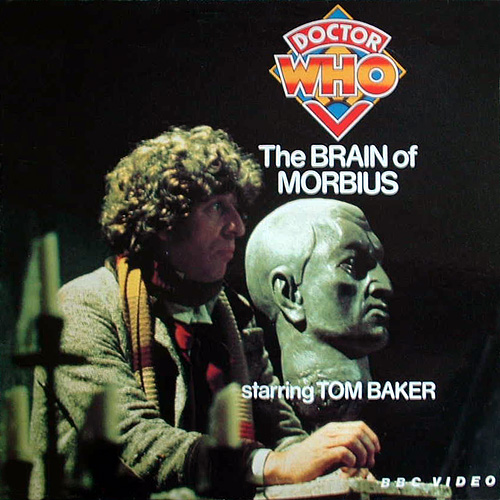
| Below is my review for this release and the ratings. |
| In some ways this story had the makings of a good story, but I think it really has not aged with time well. Maybe it is the special effects, or making the acting - I am not sure. |
| Ratings |
|---|
| My rating | 3 |
| Guest rating | Current average value is 3.
To vote, please select one of these buttons: |
Other versions |
| Below are some other releases which are related to BBCL 2012. |
| [videos] | BBCV 2012 | Doctor Who - The brain of Morbius |
| [videos] | BBCV 4388 | Doctor Who - The brain of Morbius |
| [dvds] | BBCDVD 1816 | Doctor Who - The brain of Morbius{PRIMARY} |
| [anything_else] | BBCB 2012 | Doctor Who - The brain of Morbius |
| [anything_else] | TBOM??????? | Doctor Who - The brain of Morbius |
| [anything_else] | BBCV 2012 | Doctor Who - The brain of Morbius |
Further information |
| LaserDisc (abbreviated as LD) is a home video format and the first commercial optical disc storage medium, initially licensed, sold and marketed as MCA DiscoVision in the United States in 1978. Although the format was capable of offering higher-quality video and audio than its consumer rivals, VHS and Betamax videotape, LaserDisc never managed to gain widespread use in North America, largely due to high costs for the players and video titles themselves and the inability to record TV programs, though it eventually did gain some traction in that region to become somewhat popular in the 1990s. It was not a popular format in Europe and Australasia. By contrast, the format was much more popular in Japan and in the more affluent regions of Southeast Asia, such as Hong Kong, Singapore and Malaysia, and was the prevalent rental video medium in Hong Kong during the 1990s. Its superior video and audio quality made it a popular choice among videophiles and film enthusiasts during its lifespan. The technologies and concepts behind LaserDisc were the foundation for later optical disc formats including Compact Disc (CD), DVD and Blu-ray (BD). |
 Main menu
 BBC - BBCL 2012